The waist circumference varies throughout the day. According to a statement from the French Society of Nutrition published in 2023, fluctuations over 24 hours are enough to distort tracking if the measurement time changes. Before looking for the right method, it is essential to establish a protocol: always in the morning on an empty stomach, or always in the evening, but not one time one, another time the other.
This constraint applies whether or not you have a measuring tape. And it is precisely when you don’t have one on hand that the rigor of the gesture matters most.
Reliability of a measurement without a measuring tape: what clinical protocols say
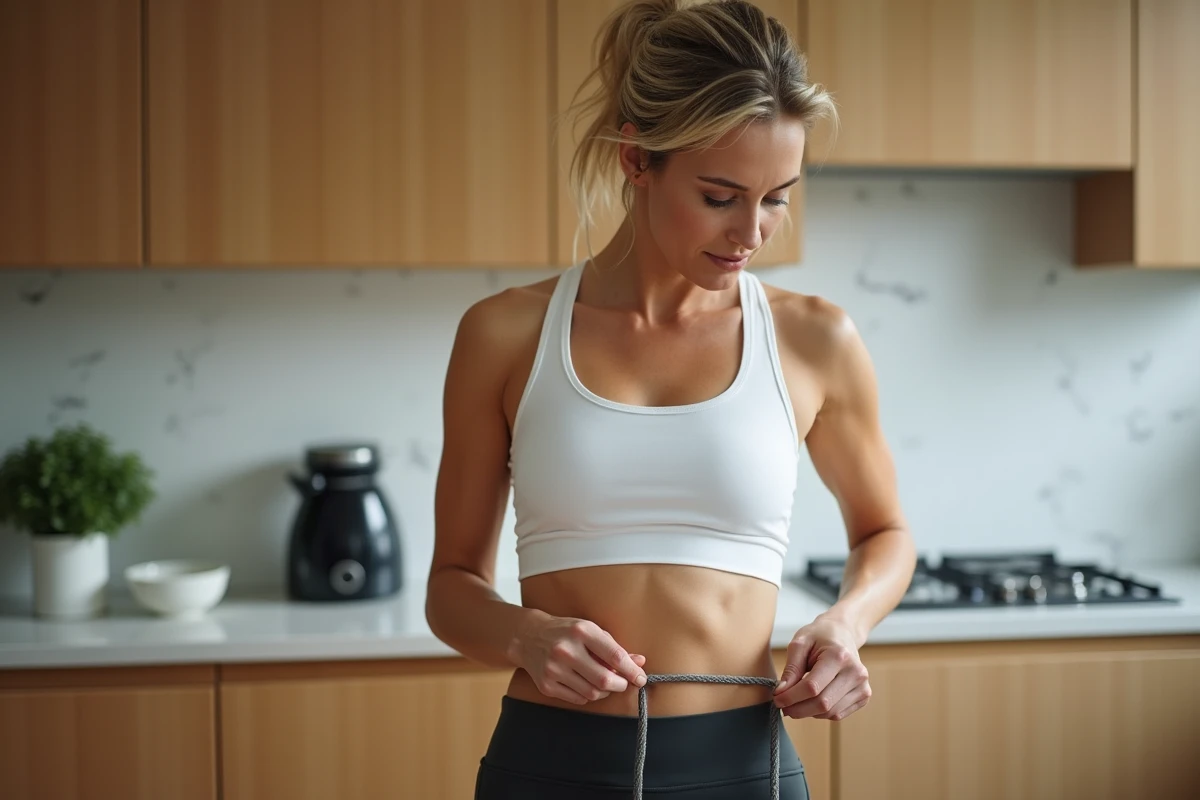
Most tutorials suggest wrapping a string around the waist, marking the crossing point, and then measuring the string with a ruler. The principle works, but the accuracy depends on parameters that are rarely mentioned.
The European Association for the Study of Obesity (EASO) recommends, in its 2022 practical guidelines, to take at least two consecutive measurements and calculate the average. This precaution compensates for positioning errors, which are common when working alone without professional equipment. A single hurried measurement can deviate by more than a centimeter from reality.
Another point: the anatomical landmark. The waist is not measured at the navel or at the waistband of the pants. The measurement point is located halfway between the bottom of the ribs and the top of the iliac crest, on the side of the torso. To locate it without assistance, place one hand on the last floating rib and the other on the hip bone, then aim for the middle.
Several approaches allow you to measure your waist without a tape with an acceptable margin of error, provided you adhere to this positioning and the rule of two measurements.
String and ruler method: practical limits and common errors
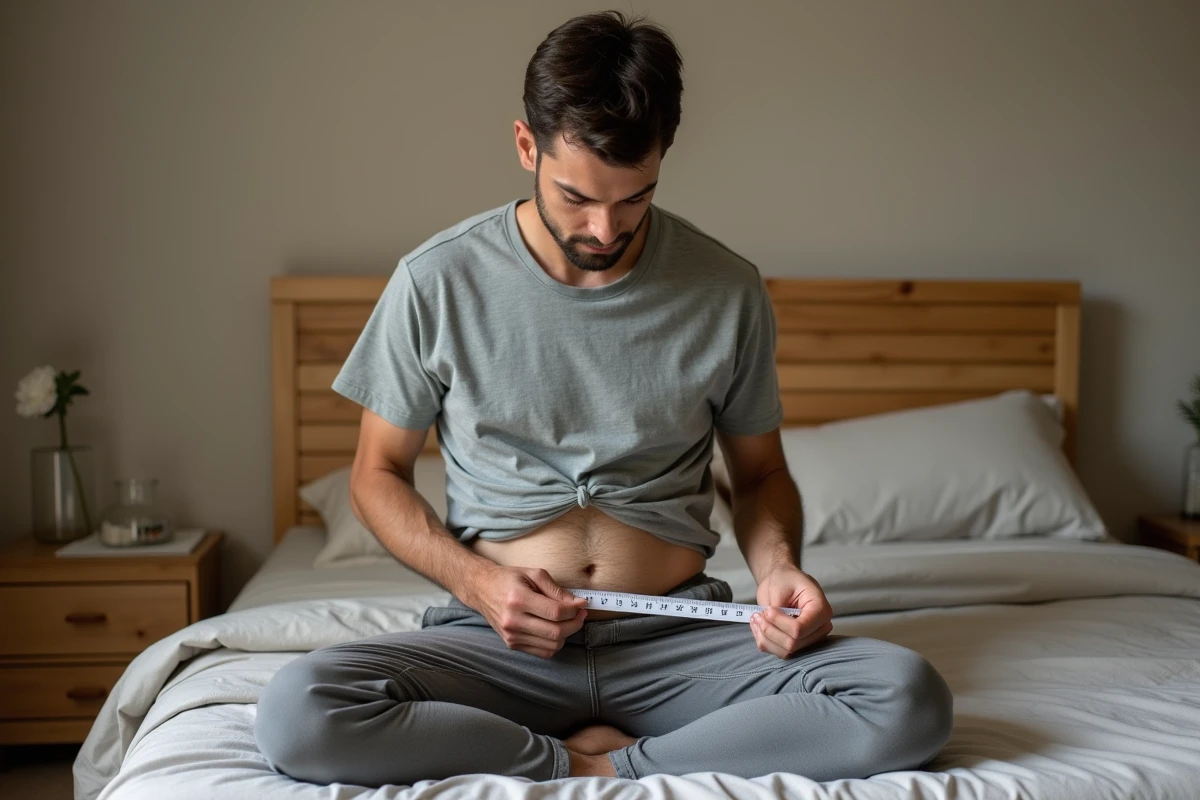
A piece of kitchen string, a shoelace, or a phone charger cable serves as a flexible substitute. The gesture is simple: wrap it around the waist at the correct landmark, mark the crossing with a marker or by pinching between two fingers, then unroll it on a ruler or an object of known length.
Materials that distort the measurement
Not all strings are equal. A hair elastic stretches and gives a value that is too low. A thick wool string adds volume. A rigid USB cable does not follow the body’s curve well.
- Cotton kitchen string remains the most reliable substitute: it is flexible, non-stretchable, and thin.
- Dental floss works for small circumferences (wrist, finger) but breaks easily on a full waist measurement.
- A fabric tape (bias tape, bag strap) is suitable as long as it is not stretchable.
The string should neither compress the skin nor float around the body. The right tension is the one that maintains contact without leaving a mark on the skin.
Reporting the length without error
If you only have a 30 cm ruler, you will need to report several times. Each report introduces a risk of misalignment. It is better to use a longer object: the edge of a kitchen table, a cutting board, or the floor along a tile whose dimension you know.
An A4 sheet measures 29.7 cm on its long side. Align the string on several sheets end to end for a quicker reading. Two aligned A4 sheets cover about 59 cm, which is sufficient for most waist circumferences without multiple reports.
Smartphone applications to estimate waist circumference: a recent avenue
Smartphone applications now allow estimating waist circumference from body photos. According to a study published in JMIR mHealth and uHealth in 2022, some of these applications have been validated in a clinical context with sufficient accuracy for individual tracking.
The principle is based on photogrammetry: two or three photos taken from defined angles, combined with the height and weight data that the user provides. The algorithm reconstructs a simplified model of the torso and deduces the circumferences.
However, reliability depends on the quality of the photos (lighting, fitted clothing, constant distance) and the accuracy of the entered data. An error of a few centimeters in the declared height shifts the waist circumference estimate. These tools are suitable for tracking a trend over several weeks, not for obtaining a precise isolated measurement.
Standardizing the measurement time: the factor that most guides overlook
A hearty meal, a workout, a day standing: waist circumference fluctuates significantly between morning and evening. The French Society of Nutrition (SFN) reminds us in its 2023 statement on anthropometric self-measurement: measuring always at the same time of day is the basic condition for tracking to make sense.
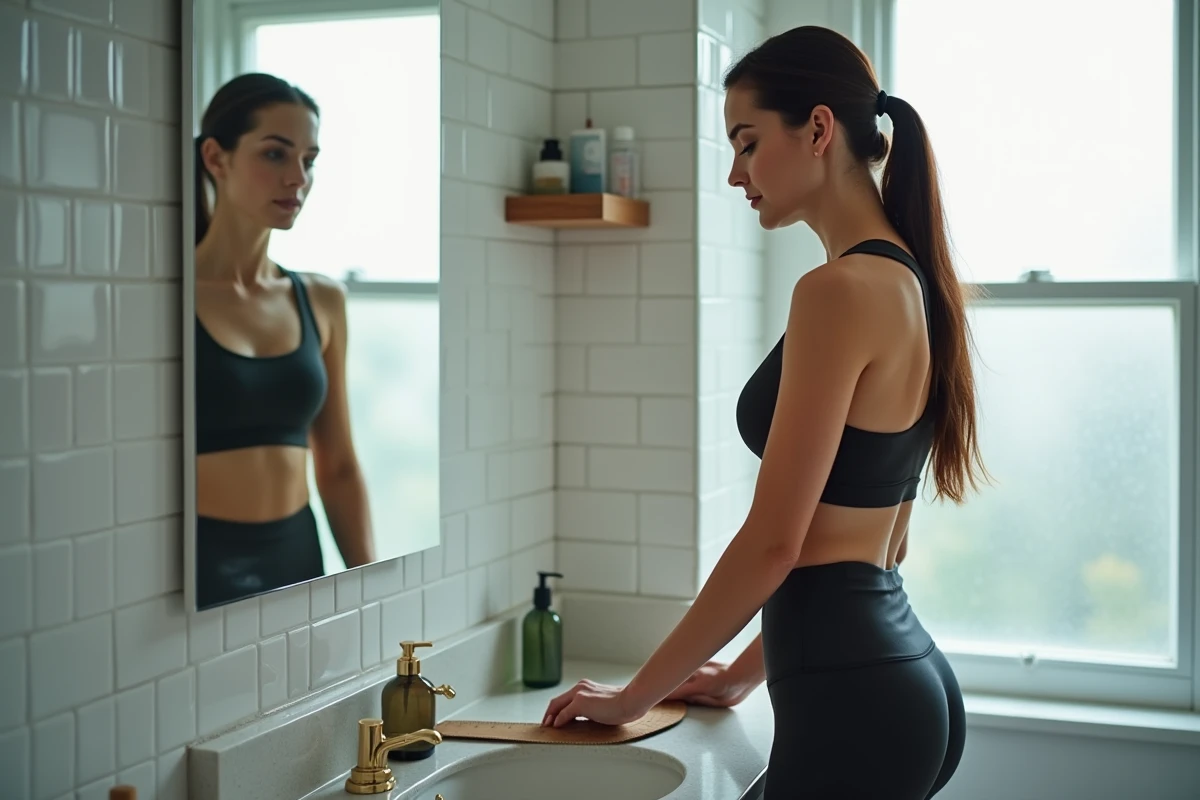
In the morning on an empty stomach, before drinking, remains the most reproducible time slot. The stomach is not distended by digestion, and the water retention from the previous day has partially subsided overnight.
- Empty your bladder before measuring.
- Stand with your feet hip-width apart, arms slightly away from your body.
- Exhale normally (do not suck in your stomach) and take the measurement at the end of the exhalation.
- Repeat the operation a second time and note the average of the two values.
This protocol applies regardless of the method used, whether string, application, or classic measuring tape. The consistency of the gesture matters as much as the precision of the tool.
Measuring your waist at home without dedicated equipment is entirely possible. String and ruler provide a reliable result if the anatomical landmark is correct and if the measurement is doubled. Photo applications offer a practical alternative for tracking over time, provided you accept a margin of approximation. The most often overlooked factor is neither the tool nor the technique, but the moment chosen to take the measurement.