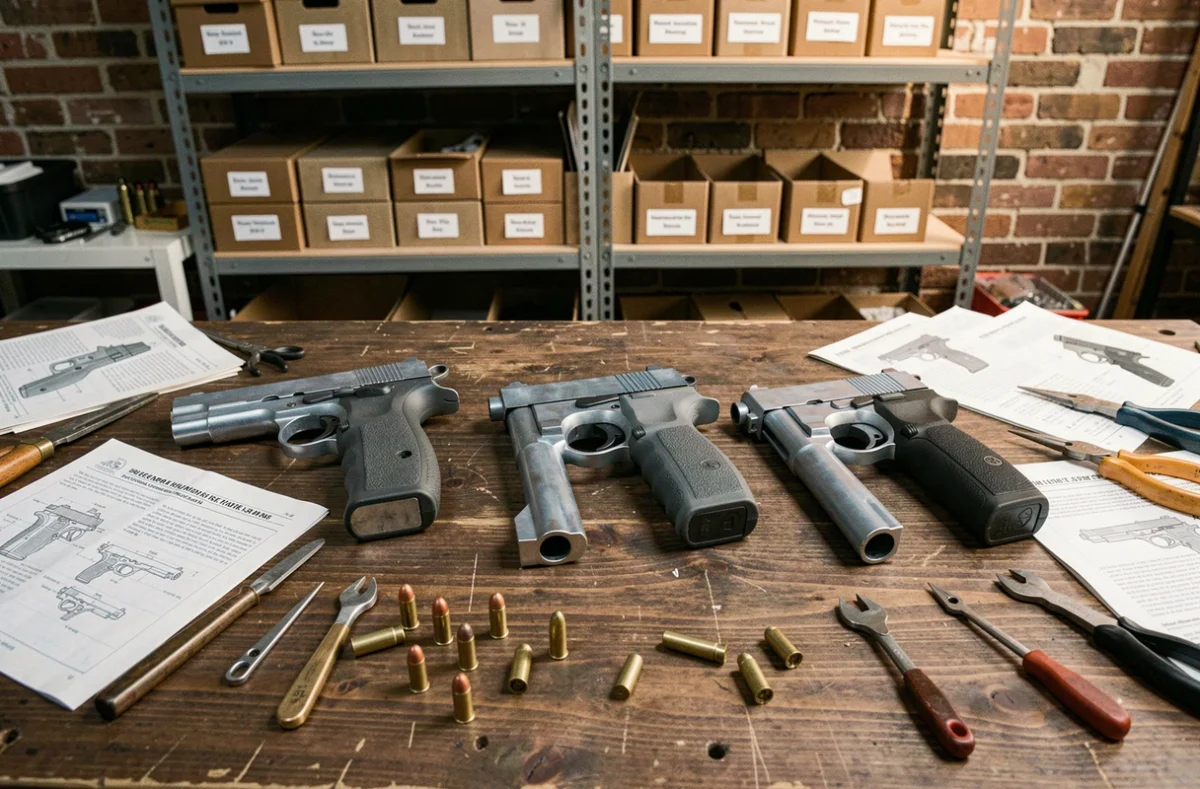
Four films, hundreds of on-screen victims, and an arsenal that evolves with every chapter. John Wick’s weapons are more than props: they tell the story of the character’s growing power, director Chad Stahelski’s choices, and the increasing influence of a weapons specialist who became indispensable: Taran Tactical Innovations. Comparing the models from one film to the next reveals how the saga built its visual and ballistic signature.
Taran Tactical Innovations: the weapons specialist’s role in the saga
Before looking at the models in detail, one fact is worth noting: most of the weapons seen on screen from the second film onward are modified versions prepared by Taran Tactical Innovations (TTI). This is more than a simple promotional partnership. TTI modifies each weapon’s barrel, compensator, trigger, and magazine well to suit the fast, fluid shooting style required by the choreography.
The first film used weapons that were relatively close to their factory configurations. Starting with Chapter 2, the so-called “sommelier” scene (in which an armorer recommends weapons like a wine merchant recommending vintages) marks a shift toward fully customized models. This move from “off-the-shelf” to bespoke weaponry mirrors the character’s transformation, as he goes from a retired killer to an increasingly exposed fighter.
A full article lists every model used, including John Wick’s pistol in its different versions across all four films.
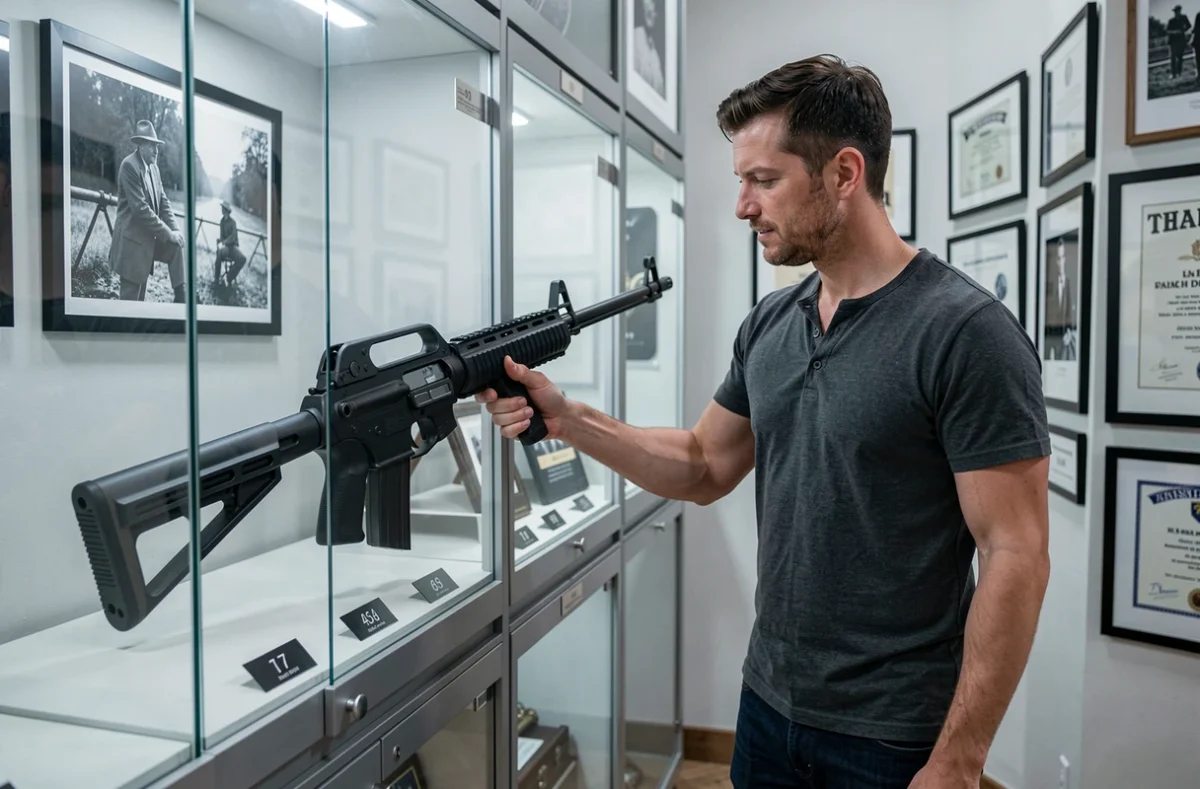
Comparison table of the main weapons by chapter
| Film | Main handgun | Notable long gun | TTI preparation |
|---|---|---|---|
| John Wick (2014) | Heckler & Koch P30L | Kel-Tec KSG (shotgun) | No |
| Chapter 2 (2017) | TTI Glock 34 Combat Master | TTI Benelli M4 (shotgun) | Yes |
| Chapter 3 – Parabellum (2019) | TTI STI 2011 Combat Master | TTI MPX Carbine | Yes |
| Chapter 4 (2023) | TTI Pit Viper | Shotgun with dragon’s breath ammunition | Yes |
The table highlights a clear trend: each chapter introduces more specialized weapons. The P30L in the first film is a service pistol with minimal modifications. The Pit Viper in the fourth film was designed in direct collaboration between TTI and the production team.
Heckler & Koch P30L vs. TTI Pit Viper: two approaches to weaponry
The P30L remains the model most closely associated with the character. It’s the weapon used in the Red Circle scene, the nightclub sequence that established the franchise. Its design is understated, its operation reliable, and its silhouette instantly recognizable thanks to its compensator.
The TTI Pit Viper, meanwhile, represents the culmination of TTI’s approach. Chambered in 9×19, with an integrated compensator and a factory-mounted optic, it was unveiled by Taran Butler at the 2021 USPSA 2-Gun Championships before appearing in Chapter 4. This journey from competitive shooting to the big screen is unusual. Generally, cinema borrows from the firearms market, not the other way around.
The Pit Viper illustrates the back-and-forth between cinema and the sporting firearms market. Its commercial popularity owes as much to the saga as to its performance in competition. It’s a rare case of fiction driving real-world demand.
How the Glock 34 Combat Master changed things in Chapter 2
The Glock 34 modified by TTI, introduced in Chapter 2, set a visual standard that has since been adopted in many action productions. Its distinctive features include:
- A threaded barrel with a compensator to reduce muzzle rise between shots, enabling the rapid follow-up shots seen on screen
- A flared magazine well for easier choreographed reloads—a technical detail that made reloading sequences as spectacular as the shooting itself
- A lighter trigger and modified connector for a shorter pull, suited to the “center axis relock” style Keanu Reeves uses in close-quarters fights
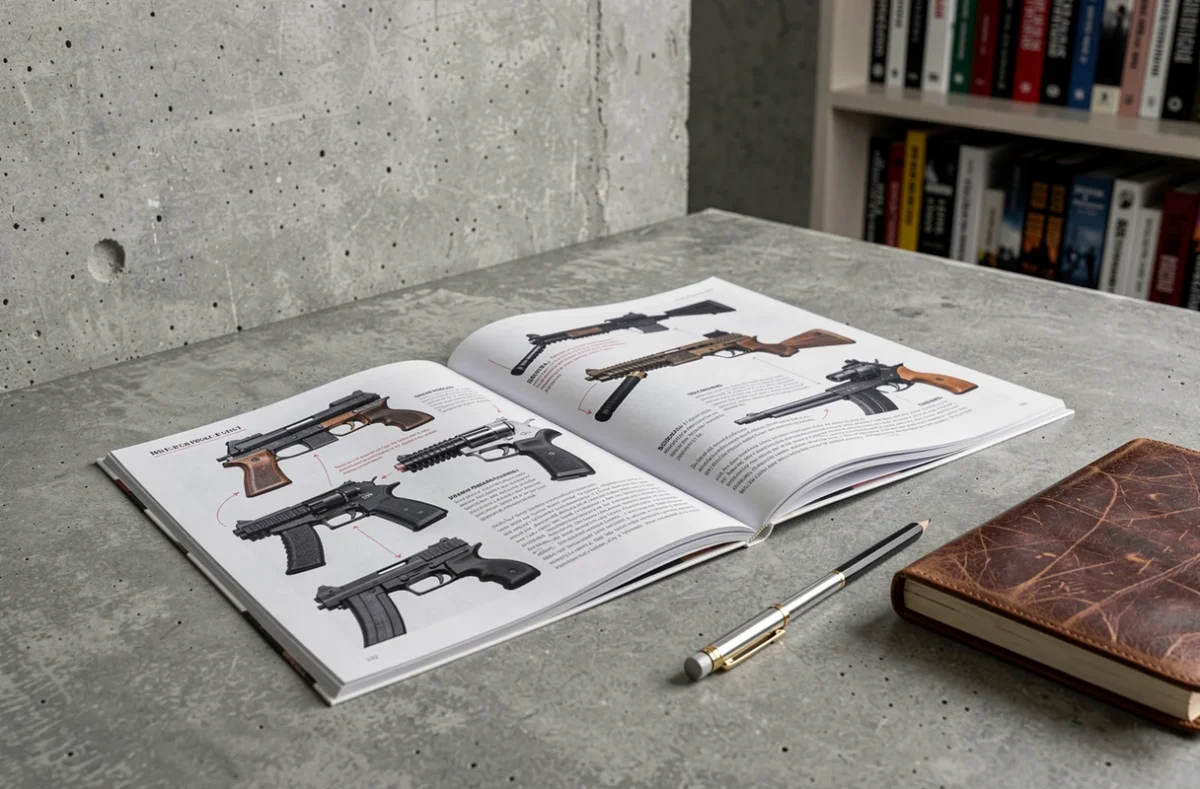
Long guns and shotguns: the rifle as a storytelling tool
Handguns grab the attention, but long guns shape the most memorable action scenes. The Kel-Tec KSG in the first film, a shotgun with two magazine tubes, appears during the break-in at Wick’s house. Its compact profile and high capacity make it a fitting choice for close-quarters combat.
In Chapter 4, dragon’s breath ammunition (incendiary rounds that shoot flames) turns an ordinary shotgun into a spectacular weapon. This choice serves the staging as much as the story: the fourth film pushes every element toward deliberate excess.
Keanu Reeves’ training and the authenticity of weapon handling
The shooting sequences feel convincing because Reeves genuinely trains with each weapon. Speaking about the fourth film, the actor described “months and months of planning and training” during his appearance at the SXSW festival in March 2023. That work shows on screen in realistic reloads, fluid transitions between handgun and long gun, and a shooting stance familiar to sport shooters.
This technical rigor sets the saga apart from most contemporary action films, where weapon handling is often inaccurate or hidden by the editing.
Weapon selection in John Wick: technical criteria and cinematic choices
Three factors determine the choice of weapon in the saga:
- Visual clarity: each weapon must be instantly identifiable on screen, favoring distinctive silhouettes such as the P30L’s prominent compensator or the Pit Viper’s angular profile
- Compatibility with the choreography: weapons must allow reloads to be filmed in a single take, ruling out models with complex mechanisms or unphotogenic designs
- Narrative fit with the chapter in question: a kit buried under concrete in the first film, a sommelier’s selection in the second, and a competition weapon in the fourth
John Wick’s arsenal isn’t a catalog. Every weapon marks a stage in the story, and the progression from the P30L to the Pit Viper sums up the character’s own journey, from a discreet professional to a fighter whose reputation precedes every entrance.