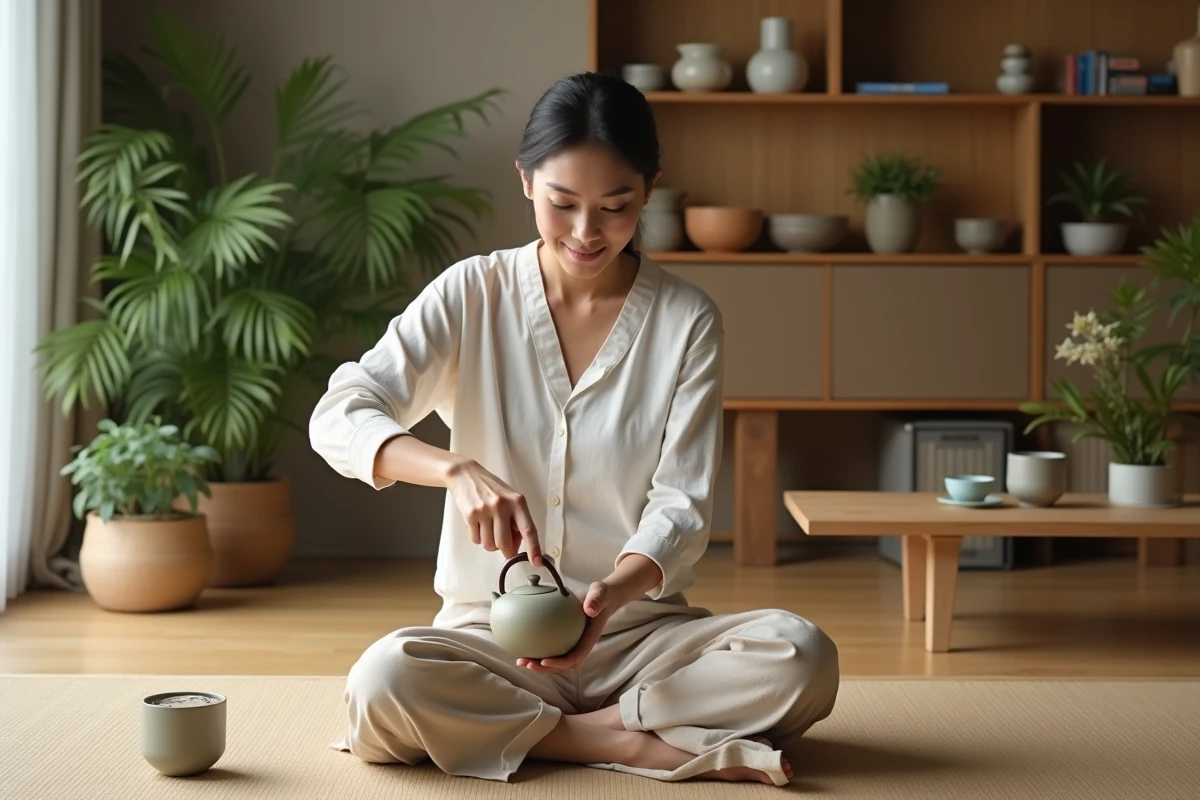
In some spaces, the multiplication of decorative objects does not lead to conviviality, but to a feeling of suffocation. However, excessive removal of elements can create an impression of emptiness, far from the comfort sought. Between overload and minimalism, achieving balance remains difficult.
There are concrete principles, often overlooked, that can transform the management of space and materials without disrupting the existing setup. Applying proven methods allows for the creation of an environment conducive to serenity without falling into austerity or monotony.
Why seeking harmony at home changes our daily lives
At home, harmony is neither about ornamentation nor excess. The house, conceived as a true zen interior, becomes a discreet barrier against the tensions from the outside. It all begins with coherence: that of shapes, materials, and colors, brought together to establish an atmosphere of well-being and balance. Here, each element fits into a thoughtful whole. Fluid circulation, controlled light, and silence compose a tangible, almost palpable peace.
When the space breathes, the mind calms down. A room, freed from excess, bathed in soft light that flows over light surfaces, invites relaxation. Tensions fade more quickly in an orderly place, where harmony is not feigned. A zen interior affects moods: it fosters serenity, infuses a positive energy that changes the tone of the days.
This symbiosis between space and spirit influences daily life profoundly. Domestic harmony has concrete effects on the quality of relationships, concentration, and sleep. To go further, https://www.zenetdeco.fr/ offers concrete solutions designed to adapt to every temperament. The habitat then transforms into a true partner of a calming rhythm.
Here are three pillars to keep in mind to create this particular climate:
- Harmony: the foundation of an environment that inspires trust and gentleness
- Serenity: a state of mind maintained by visual unity and simplicity
- Balance: the foundation of a positive energy that is felt, day after day
What are the essentials for establishing a zen and calming atmosphere
In a zen interior, simplicity is never synonymous with coldness. Here, minimalism is expressed with discernment: each object finds its reason for being, nothing clutters the eye. Furniture with clean lines reveals the space rather than saturating it. Colors play a decisive role: soft, natural shades like off-white, beige, pearl gray, or pale green create a calm and reassuring ambiance.
Natural light deserves your full attention. Free the windows, choose curtains made of light materials like linen or cotton, and let the brightness fill the room. In the evening, prefer lamps made of paper, wood, or rattan to maintain this enveloping softness.
The choice of natural materials is a decisive asset for anchoring the room in a warm and authentic atmosphere. Here are some materials to favor:
- light or raw wood, for warmth and structure
- bamboo, rattan, wicker, for their flexibility and lively appearance
- linen, cotton, wool, for softness and comfort
- stone, ceramic, jute, sisal, for their character and simplicity
Natural textures add relief without ever weighing down the whole.
A few plants are enough to transform the energy of a place: bonsai, ficus, fern, monstera, pothos… Each captures light, purifies the air, and enhances the feeling of calm. In terms of decoration, restraint is key. A vase, a pebble, a candle are enough to mark the space. The empty space, far from being a flaw, allows energy to circulate and gives the room its full meaning.

Feng Shui and Japandi: concrete inspirations to transform your interior
The zen style is not a matter of chance: it is directly inspired by Japanese philosophy and the wisdom of Chinese feng shui. Today, this dialogue continues in the Japandi aesthetic, where Scandinavian purity meets Japanese sobriety. The challenge? Finding the balance between functionality and beauty, between raw material and softness of lines.
Feng shui revolves around the fluid circulation of energy, qi, and the five elements. These elements are expressed very concretely:
- a wool rug for earth
- a fountain or a glass vase for water
- a candle or a lamp for fire
- an oak or bamboo piece of furniture for wood
- a mirror or a sculpture for metal
Carefully placing these elements, without excess, refines the flow of energy and helps to calm the atmosphere.
In the Japandi trend, Japanese decoration prefers low lines, subtle asymmetry, and natural shades, bathed in soft light. A tatami, a light wood bench, a linen curtain are enough to set the mood. Add a structured plant, a polished pebble, a Japanese paper lamp: each detail matters. As a result, the superfluous disappears, making way for a space where every gesture, every object invites calm and simplicity.
Creating a zen interior is not about following a trend: it is about inviting calm into your home and allowing it to settle in for the long term. Sometimes, it takes just a rethought detail for the house to change its face and for daily life to suddenly take on a different rhythm.