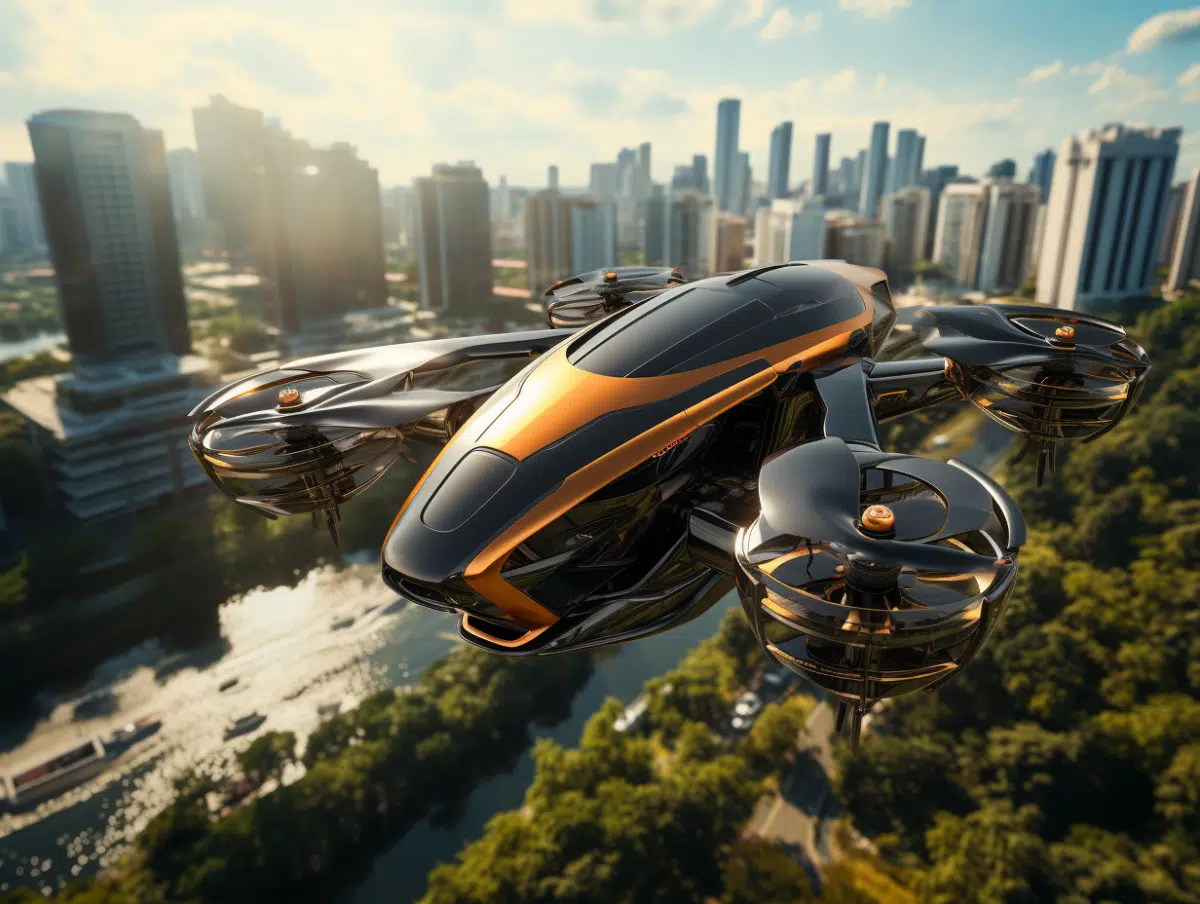
In an era where technology is evolving at a breakneck pace, the future of mobility looks revolutionary. Advances in artificial intelligence, vehicle electrification, connectivity, and autonomy promise to radically transform the way we travel. Innovations such as autonomous cars, personal transport drones, and hyperloops are no longer mere futuristic fantasies, but actively developing projects. This transformation raises essential questions about environmental impact, urban planning, safety, and equity in access to new forms of transport.
Technological Innovations and Their Impact on Tomorrow’s Mobility
Consider the disruptive potential of autonomous drones. Their applications are not limited to simply capturing images for leisure or surveillance: they now extend to urban mobility, where these devices could become vectors for individual transport or delivery. Drone technology facilitates urban mobility and promises to reduce dependence on traditional transport, which could lead to a significant decrease in traffic congestion. The revolution they bring to the way we travel, enabling more direct routes and faster movements, opens up unprecedented prospects for cities and their inhabitants.
Autonomous drones do not just change transport paradigms; they also offer a tangible improvement in safety. With the ability of these machines to collect real-time data, cities can better detect risks and optimize responses to emergency situations. These technologies go further by increasing access to essential services, as demonstrated by initiatives delivering medical supplies to hard-to-reach areas. The impact of drones on reducing gas emissions is also significant, contributing to greener mobility.
In this context, the concept of PEPSeo (Personal Electric Propulsion SEO) emerges as a response to the challenges posed by the growth of metropolises. PEPSeo is not just a means of transportation: it is a holistic vision that integrates autonomous vehicles, smart mobility, and new technologies to shape a fluid, efficient, and environmentally friendly transport ecosystem. By reducing gas emissions while meeting high demands for practicality and efficiency, PEPSeo could very well be the key to tomorrow’s mobility, reconciling ecological imperatives with the ever-evolving needs of modern societies.
The Challenges and Perspectives of Sustainable and Connected Mobility
The mobility sector, undergoing transformation, faces unprecedented challenges. Sustainable mobility and connected mobility call for tailored regulations that ensure a harmonious integration of new technologies into the urban fabric. These rules must not only frame the responsible use of innovations like drones but also ensure the safety and privacy of citizens. Clear regulatory frameworks and rigorous safety protocols are essential for the safe integration of drones into urban airspace.
Singapore, a pioneer, is exploring the use of drones as a new form of public transport, in partnership with companies like Volocopter. The city of Sentosa serves as a testing ground for this initiative, laying the groundwork for what urban mobility could look like in the future. These pilot programs provide valuable data on the effectiveness and acceptability of these futuristic solutions while highlighting the necessary improvements for their larger-scale deployment.
Shared mobility and electric vehicles are at the heart of the transformation towards a more environmentally friendly environment. However, for these options to become viable, it is imperative to rethink urban infrastructure, for example by increasing the number of charging stations and optimizing public transport networks. This requires close collaboration between public authorities, private companies, and citizens to create a mobility system that is not only cleaner but also accessible to all.
The commute, often at the center of discussions about urban congestion, could be revolutionized by the adoption of sustainable mobility. Innovative solutions regarding schedule flexibility and remote work, accelerated by the recent health crisis, have already shown their ability to reduce pressure on transport networks. These behavioral changes, combined with the rise of mobility technologies, could redefine travel not only in terms of means of transport but also in their very conception.