
The M réso network in Grenoble serves the metropolitan area with five tram lines and several dozen bus lines. For users who work irregular hours, the question of the last tram and the first morning service dictates the organization of their daily commutes.
The time slots covered by the tram do not always meet the needs of hospital staff, delivery drivers, or security agents. Some of them must combine multiple modes of transport.
Night Trams in Grenoble: Time Slots Concentrated on the Weekend
The Grenoble tram network does not operate continuously at night. The last tram services generally occur early in the evening on weekdays, with a slightly wider range on Friday and Saturday nights.
From 9:30 PM, connections between tram lines are facilitated according to M réso, allowing travelers to combine two lines without excessive waiting. The Chrono lines then take over to provide additional service until the end of operations.
To check the night tram schedule in Grenoble on 100 Pour 100 Annonces, simply check the updated schedule sheets that detail the last departures by stop and by line.
However, this organization lags behind other French metropolitan areas. The TCL network in Lyon offers night tram and bus coverage seven days a week, while Grenoble tends to limit its enhanced night services to weekends. For shift workers, this difference directly impacts the attractiveness of public transport.

Nurses, Delivery Drivers, Night Agents: Combining Tram and Complementary Mobility in Grenoble
Users with atypical hours represent a population often invisible in transport network planning. Night nurses, early morning delivery drivers, maintenance agents: their shifts frequently fall into time slots when the tram is either not yet running or has just stopped.
Short-Distance Carpooling as a Night Relay
Several carpooling platforms operate on short routes within the metropolitan area. For a nursing assistant finishing at midnight at the La Tronche hospital and needing to get to Échirolles, the last tram has already passed more than an hour ago. Carpooling with a motorized colleague then becomes the default solution.
This arrangement relies more on informal agreements between colleagues than on a structured offer. Instant carpooling apps struggle to reach a critical mass of users during these late slots in a metropolitan area the size of Grenoble.
Bicycles and Cargo Bikes: A Morning Alternative Under Certain Conditions
The cycling network in the Grenoble metropolitan area is sufficiently developed to provide a credible alternative to the morning tram. The bike lanes along the main routes connect major employment hubs (CHU, Grésivaudan business areas, city center) in all seasons.
For delivery drivers using a cargo bike, the flat topography of Grenoble facilitates loaded trips before dawn. The bike-sharing service complements this offer, but its availability hours and the condition of the fleet during off-peak times remain variables to check on a case-by-case basis.
- Carpooling among colleagues mainly works in hospitals and logistics areas where schedules are shared by several employees
- Personal or cargo bikes offer total autonomy, provided there is secure parking at the workplace
- Shared scooters, when available at night, cover the last kilometers but not long trips
First Tram of the Morning in Grenoble: What the Schedule Sheets Don’t Always Indicate
The first tram departures occur early in the morning, but the exact time varies by line, day of the week, and direction of travel. The same stop can see the first tram pass with a half-hour difference between Monday and Sunday.
This variability complicates planning for workers who start before 6 AM. The Métromobilité portal, a reference for travel in the metropolitan area, allows for real-time multimodal route calculations. However, the displayed data corresponds to theoretical schedules, and field feedback diverges on this point: some users report regular discrepancies between the displayed time and the actual passage during the very first slots.
For those relying on the first tram to connect with a TER or a Grésivaudan bus, a safety margin of at least one passage is recommended. Missing the first tram without a motorized alternative often results in being late, due to insufficient frequency on the complementary bus lines at that hour.
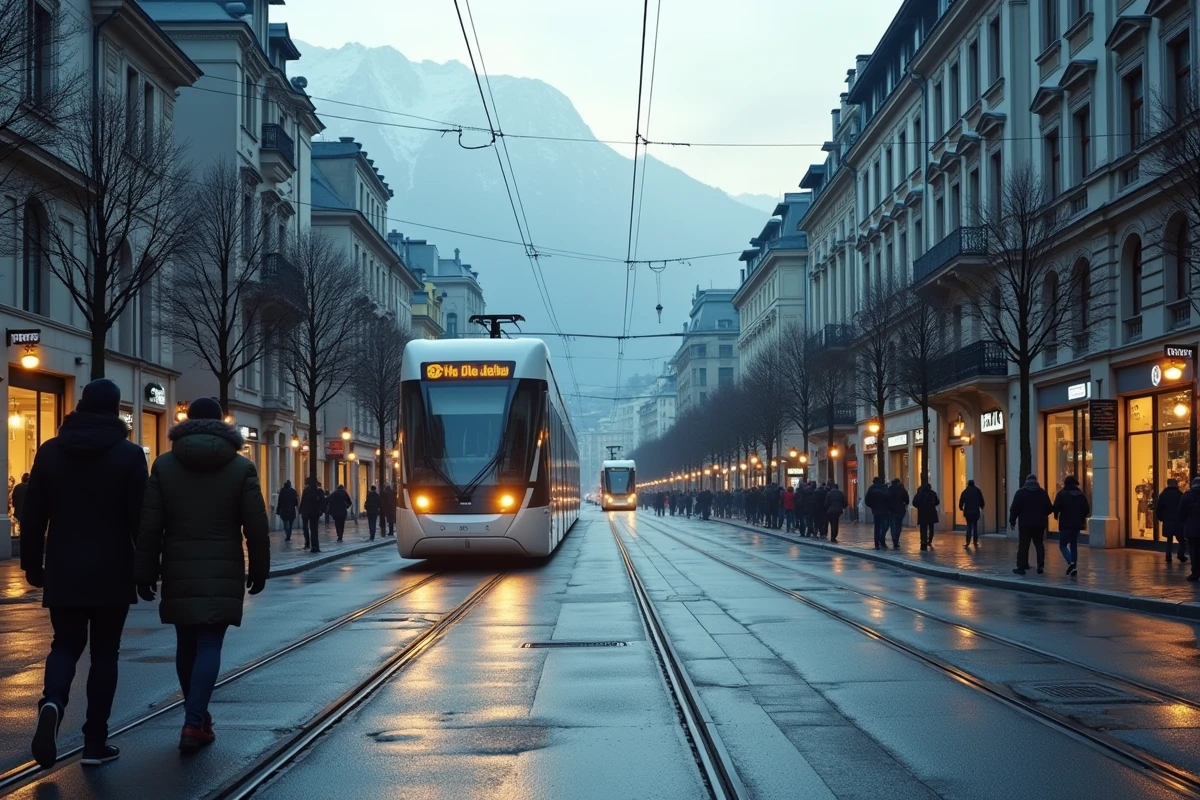
Night Transport in Grenoble: The Limits of the Current Network and Possible Developments
The Grenoble metropolitan area, through the SMMAG (Syndicat Mixte des Mobilités de l’Aire Grenobloise), coordinates transport policies over a scope that includes Grenoble Alpes Métropole, the Pays Voironnais, and the Grésivaudan community of communes. This expanded governance covers more than a hundred municipalities, but budgetary decisions prioritize peak hours at the expense of night and early morning slots.
The available data do not allow for conclusions about a potential extension of tram time slots in the short term. The SEMITAG activity report mentions ongoing technological innovations, without specifying whether they pertain to the extension of night service.
- The M réso network covers five tram lines and dozens of bus lines, but night service remains limited on weekdays
- The SMMAG encompasses several intercommunalities, complicating decisions on time slot amplitudes
- Comparisons with Lyon or other French cities show that Grenoble lags behind in night service offerings
For the users concerned, the solution today involves a personal assembly of transport modes. Checking the schedule sheets line by line, identifying a regular carpooler, having a bike in working condition at night: organizing night travel in Grenoble still relies on individual logistics rather than a structured public offer.