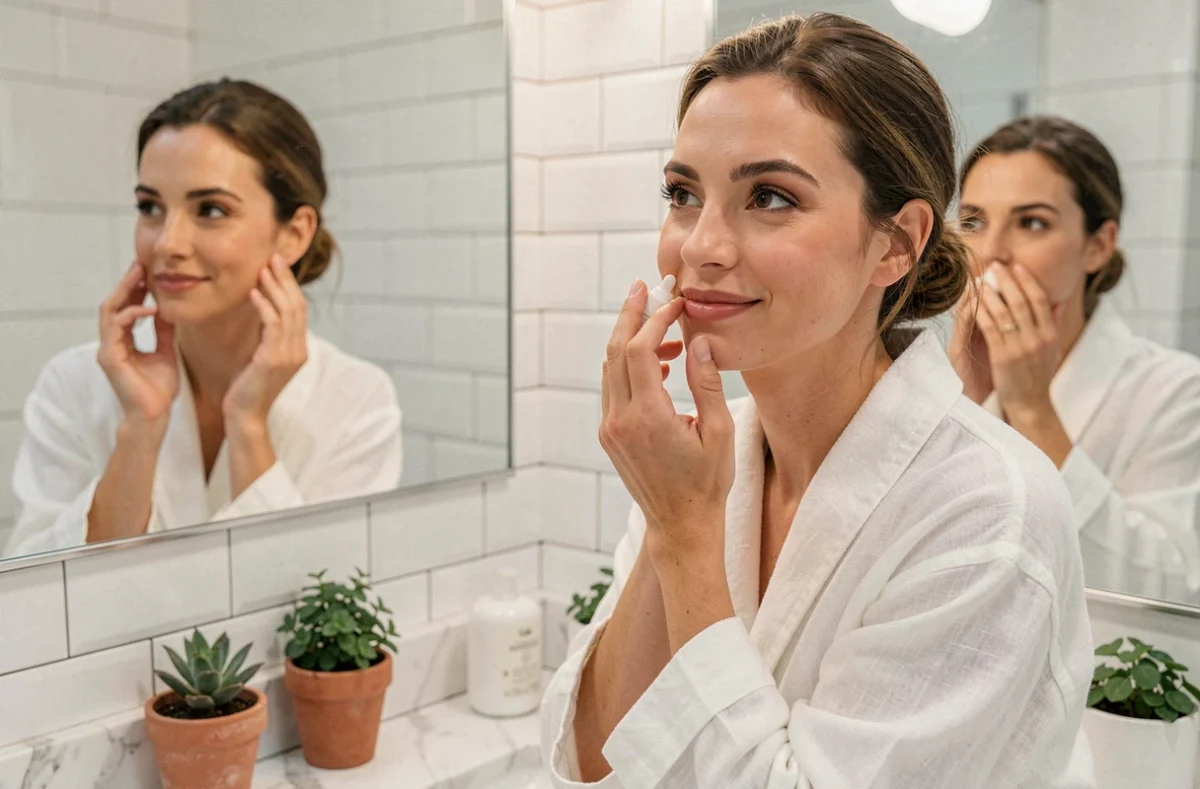
The online cosmetics market is growing, skincare routines are becoming more complex, and social media is multiplying ten-step regimens. In this context, everyday beauty is caught between promises of a natural glow and the real risk of overwhelming the skin.
European regulations are evolving too: labeling requirements are being extended to fragrance allergens, with new obligations applying to products placed on the market from 31 July 2026 and a transition period until 31 July 2028 for products already on sale. Choosing a skincare product has a direct impact on skin health, far beyond its brand image.
Essential oils and homemade recipes: the limits of “natural” skincare
Natural beauty tips are everywhere, from honey masks to citrus essential oil lotions. The word “natural” may sound reassuring, but it does not mean harmless.
Anses warns of the risk of skin irritation and allergic reactions associated with certain essential oils. Citrus-based oils (lemon, orange, bergamot) can cause photosensitivity, making the skin more vulnerable to the sun. Applying a lemon-based preparation before going outside, even briefly, can trigger lasting dark spots.
The problem is not limited to essential oils. Homemade scrubs (sugar, baking soda), when used too often, weaken the skin barrier. Layering irritating active ingredients makes already sensitive skin worse—a point that tutorials often overlook. For more information on skincare suited to different needs, the beauty website Les Carnets de Mademoiselle offers detailed routines that take these precautions into account.
The enhanced labeling required by the new European regulations will make it easier to identify fragrance allergens in finished products. Until then, checking the INCI list remains the most reliable step before adding a new product to your routine.
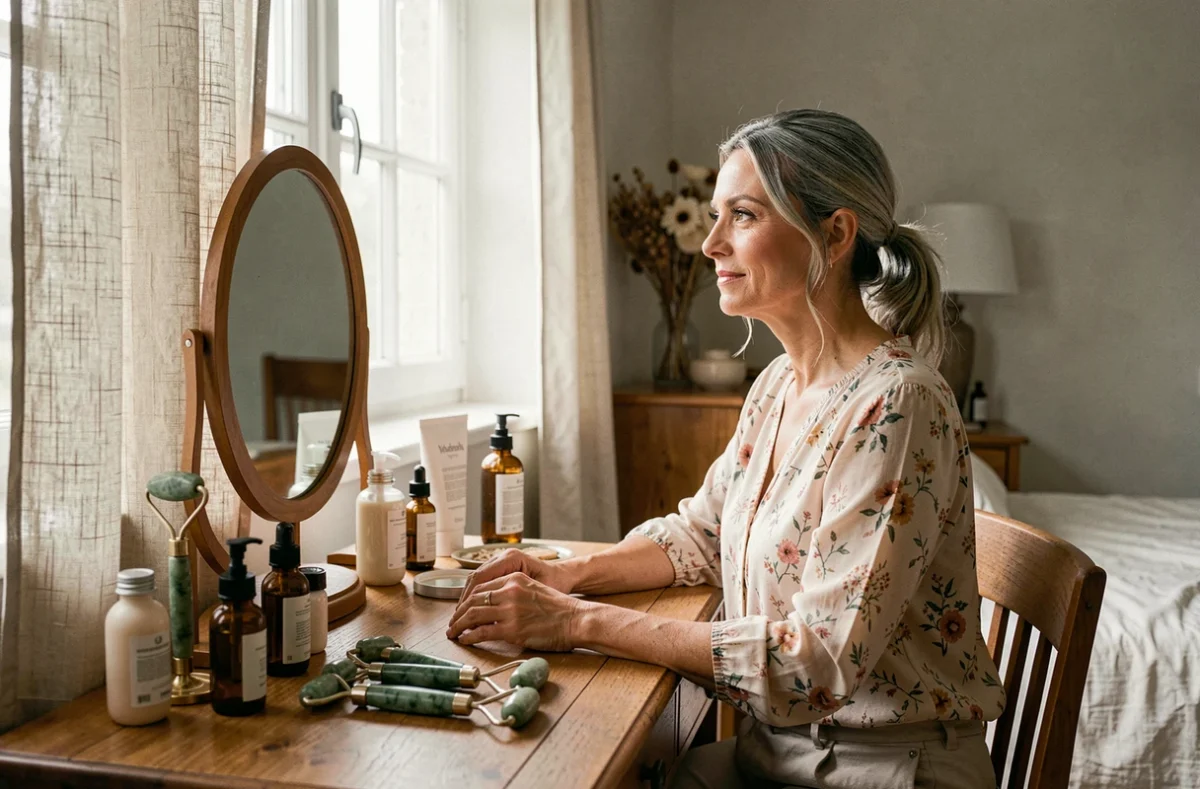
A natural-glow routine for reactive or acne-prone skin: fewer products, more consistency
When faced with dull skin or blemishes, it’s tempting to add a serum, then an exfoliant, then a mask. Recent dermatological advice points in the opposite direction: a simple foundation (cleanse, moisturize, protect) is enough, with extra steps justified only by a specific need.
For reactive or adult acne-prone skin, Madame Figaro recommends a minimalist routine. The reasoning is simple: every additional product increases the risk of interactions and irritation. A gentle cleanser, a non-comedogenic moisturizer, and sunscreen cover the face’s basic daily needs.
What to avoid on already irritated skin
- Mechanical exfoliants (scrubs, rotating brushes), which prolong inflammation and delay the healing of acne lesions
- Layering serums with concentrated active ingredients (vitamin C, retinol, fruit acids) on the same evening, which disrupts the skin barrier
- Homemade recipes containing acidic ingredients or essential oils without first testing them on a small area of skin
- Changing your entire routine every two weeks, which makes it difficult to identify which product is causing a reaction
Introduce just one new product at a time and wait two to three weeks before adding another. This makes it easier to pinpoint the cause if a reaction occurs. The principle applies to all skin types, but it becomes essential when skin is already compromised.
When to see a dermatologist instead of trying yet another product
The line between a daily skincare product that improves your complexion and a buildup of products that perpetuates a problem can be a fine one. Several warning signs mean it’s time to leave the cosmetics aisle and make a medical appointment.
Acne that persists for more than a few months despite a simplified routine, chronic redness that does not respond to any product, or spreading hyperpigmentation: these issues go beyond everyday beauty. Persistent irritation after simplifying your routine is a reason to seek medical advice, not an invitation to try one more product.
Madame Figaro raises a point that beauty advice articles generally sidestep: has our skin become “more demanding,” or is it the growing number of skincare products that is making it more sensitive? The question remains open, but dermatologists are seeing an increase in consultations related to overly complicated routines.

Daily skincare routine: three steps that work for every skin type
Rather than a ten-step regimen, an effective facial skincare routine is built on a consistent foundation:
- Gentle cleansing morning and evening, suited to your skin type (foaming gel for combination skin, cleansing milk or micellar water for dry or reactive skin)
- Targeted moisturizing with a cream whose texture suits seasonal needs (richer in winter, lighter in summer)
- Daily sun protection, including in the city and on overcast days—the most well-documented step for preventing signs of aging and dark spots
Serums, masks, and other treatments can then be added as needed. A serum is not an essential step, but an optional addition depending on your specific needs, whether that means boosting radiance, providing deep hydration, or correcting dark spots.
Everyday beauty and labeling: read a product’s label before applying it
The extension of European fragrance-allergen labeling requirements directly affects consumers who want to know what they are putting on their skin. The list of declared fragrance allergens is growing, making it easier to identify potentially problematic substances in everyday cosmetics.
In practice, this means that products sold after July 2026 will carry more comprehensive information. For reactive skin, this transparency is a practical tool: spotting a known allergen in the INCI list before buying can prevent a reaction that no repair product could fix afterward.
Adapting your beauty routine starts with reading the label, not following a trend. The simplest way to bring out your natural glow every day is to avoid irritating your skin with poorly chosen products—and to seek advice when everyday skincare is no longer enough.