In France, drought-related watering restrictions become more widespread every summer, and local prefectural orders can ban all garden watering for several weeks.
At the same time, regulations on invasive plants have tightened, and some species that were still sold at garden centers a few years ago are now banned from being planted. Creating a wildlife-friendly garden therefore means taking both constraints into account when choosing plants, long before thinking about decoration or furniture.
Wildlife-friendly plants and invasive species risks: where to draw the line
Attracting pollinators and birds often means choosing plants with abundant blooms or berries. A common approach is to pick plants labeled as “native” at a garden center. But this overlooks an important factor.
A species native to a particular region may not suit poorly drained clay soil or an urban microclimate that is several degrees warmer than the local average. Soil, drainage, and exposure matter just as much as a plant’s geographic origin. Growing a variety of species in the same bed helps limit the spread of pests, which also protects the wildlife you want to attract.
Before buying any plants, it is best to check the regulatory status of each one. France’s official list of banned invasive plants includes species that are still available in some online catalogs.
Confusing them with permitted varieties can mean having to remove them and, in some cases, facing legal action if they spread to a neighboring property. Anyone looking to discover gardening with Instant Jardin will find plant guides filtered by soil type and climate zone, making it easier to narrow down the options in advance.
Water-wise garden beds: designing plantings to cope with watering restrictions
Creating a wildlife-friendly garden does not mean watering every day. Droughts now trigger level 2 alerts or higher in many departments, with ornamental gardens subject to watering bans. Taking this into account when designing garden beds changes the way you plan your planting.
Drought tolerance does not mean no watering at all
Even drought-tolerant plants need regular watering during their first year after planting. Once established in the ground, a well-rooted plant can eventually fend for itself. Potted plants, however, continue to need significantly more water because the limited volume of soil restricts their water reserves.
Confusing heat tolerance with frost tolerance can also cause problems. Rosemary can withstand summer drought, but a cold, wet winter in compacted soil can kill it. Drainage, heat, and frost are three separate factors to assess for each spot in the garden.
Group plants according to their water needs
Grouping plants by water needs can transform garden maintenance. Instead of arranging plants by color or height, group them according to how much water they use:
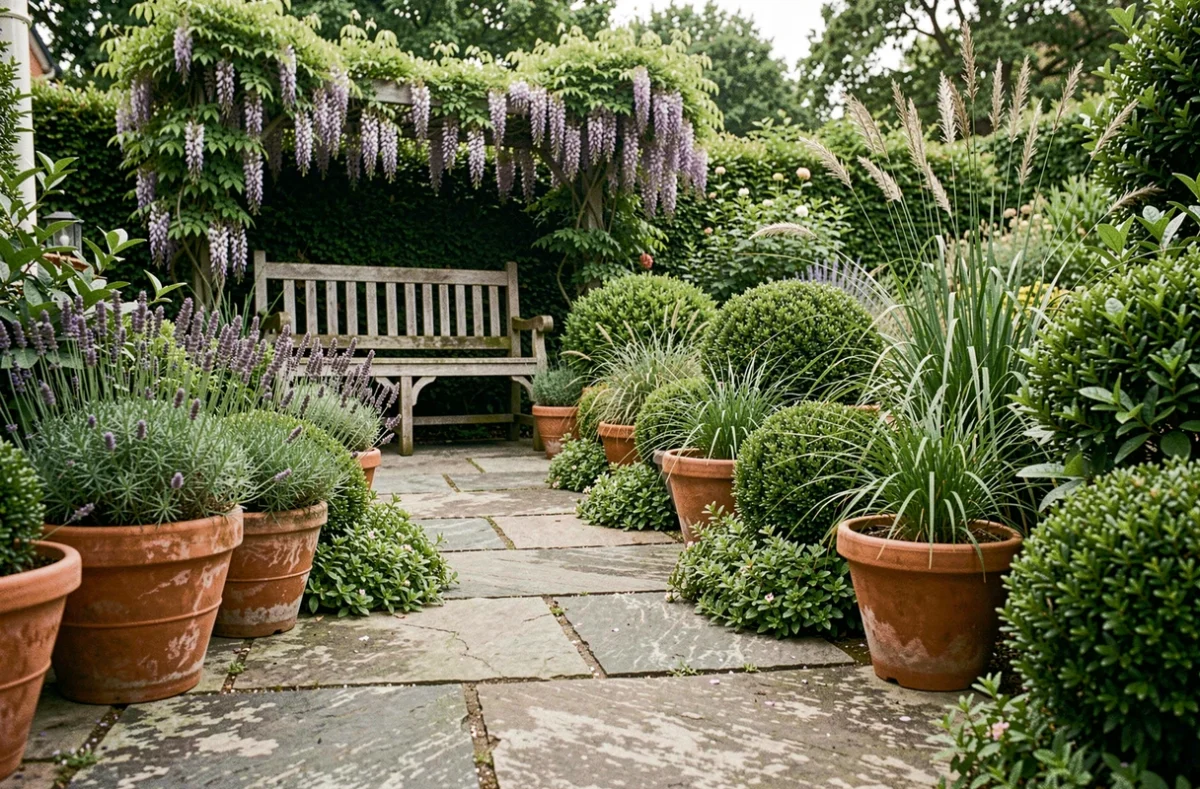
- Dry zone (slopes and south-facing borders): lavender, yarrow, ornamental grasses, and sedums. Once established, these plants can go several weeks without watering and attract pollinators over a long flowering season.
- Intermediate zone (partially shaded beds and the base of hedges): hardy geraniums, shrubby salvias, and daylilies. A weekly supplementary watering is enough during hot weather.
- Moist zone (near a water feature or at the bottom of clay-rich ground): astilbes, ligularias, and ferns. These plants benefit from the soil’s natural moisture and need no additional watering unless a prolonged drought sets in.
This approach reduces overall water use and prevents garden beds from withering at the first drought alert. A garden designed around moisture zones stays presentable even under level 2 watering restrictions.
Soil and site: practical checks to make before planting
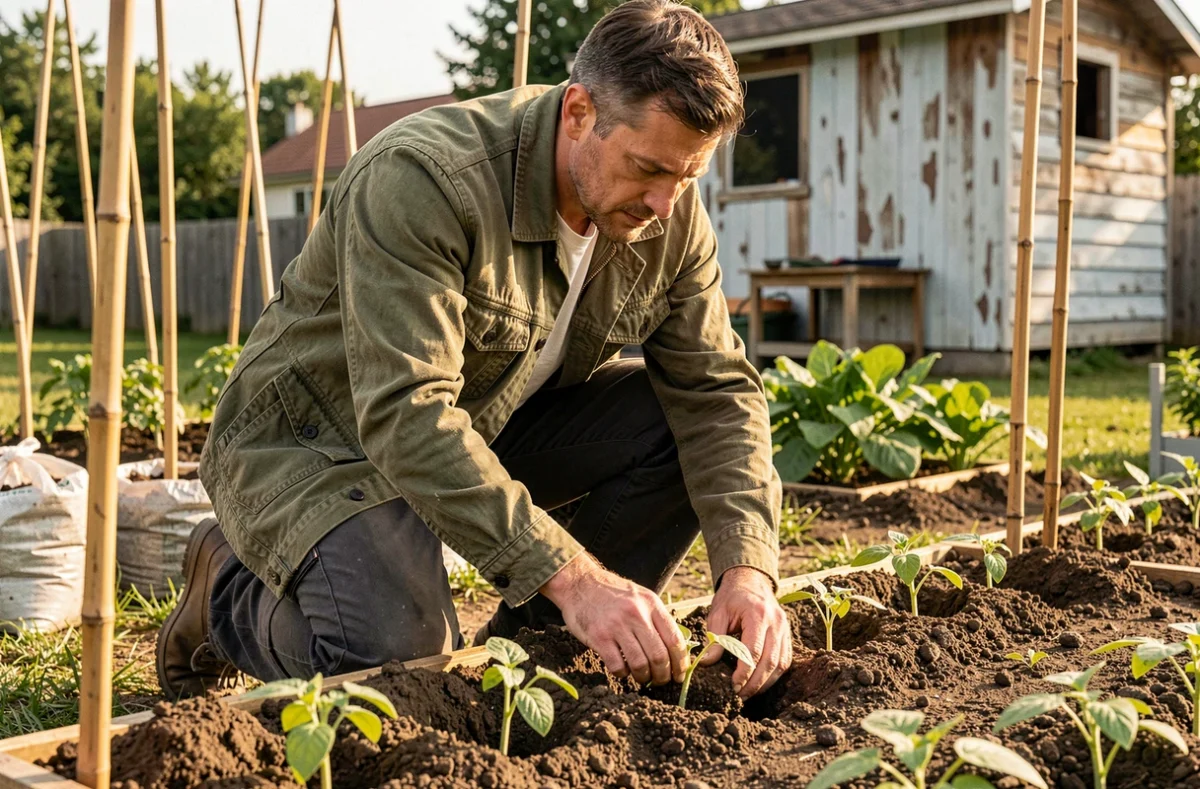
Most planting failures are caused by a mismatch between the chosen plant and the actual soil conditions. Testing the soil before buying anything can save you from costly replacements after a couple of seasons.
A simple test is to take a handful of damp soil and roll it between your fingers. If it forms a smooth, sticky ribbon, the soil is clay-rich: it holds water but drains poorly. If it crumbles and will not hold its shape, the soil is sandy: it drains quickly but retains neither water nor nutrients. Clay and sandy soils need different plants and different mulches.
Adding compost improves both types of soil, but the amounts and frequency differ. In clay soil, adding coarse organic matter (shredded branches or partially matured compost) loosens the soil structure. In sandy soil, well-rotted compost improves water retention.
Exposure and microclimates in a small garden
In urban areas, light-colored walls reflect heat and create pockets where temperatures rise above those elsewhere in the garden. A bed planted less than a meter from a south-facing wall experiences heat stress that the same plants would not face in the middle of the lawn.
Observing where shade falls at different times of day, in both summer and winter, gives you an informal heat map of the garden. Placing the most heat-sensitive plants in areas shaded in the afternoon extends their flowering season and reduces their water needs.
Sustainable plant care: reduce the work without compromising appearance
A wildlife-friendly garden loses its appeal if it takes several hours of work every week. A few design choices can significantly reduce the time required.
Organic mulch (bark, wood chips, or hemp straw) covers the soil between plants, suppresses weeds, and reduces evaporation. A sufficiently thick layer, renewed once a year, replaces hand-weeding in most garden beds. Evergreen ground covers (creeping thyme, periwinkle, and ground ivy) do the same job in areas where mulch blows away or breaks down too quickly.
- Pruning shrubs just once a year, in late winter, rather than repeatedly shaping them, reduces plant stress and encourages birds to nest in spring.
- Leaving the dry stems of perennials in place until the end of February provides winter shelter for beneficial insects and avoids a time-consuming fall cleanup.
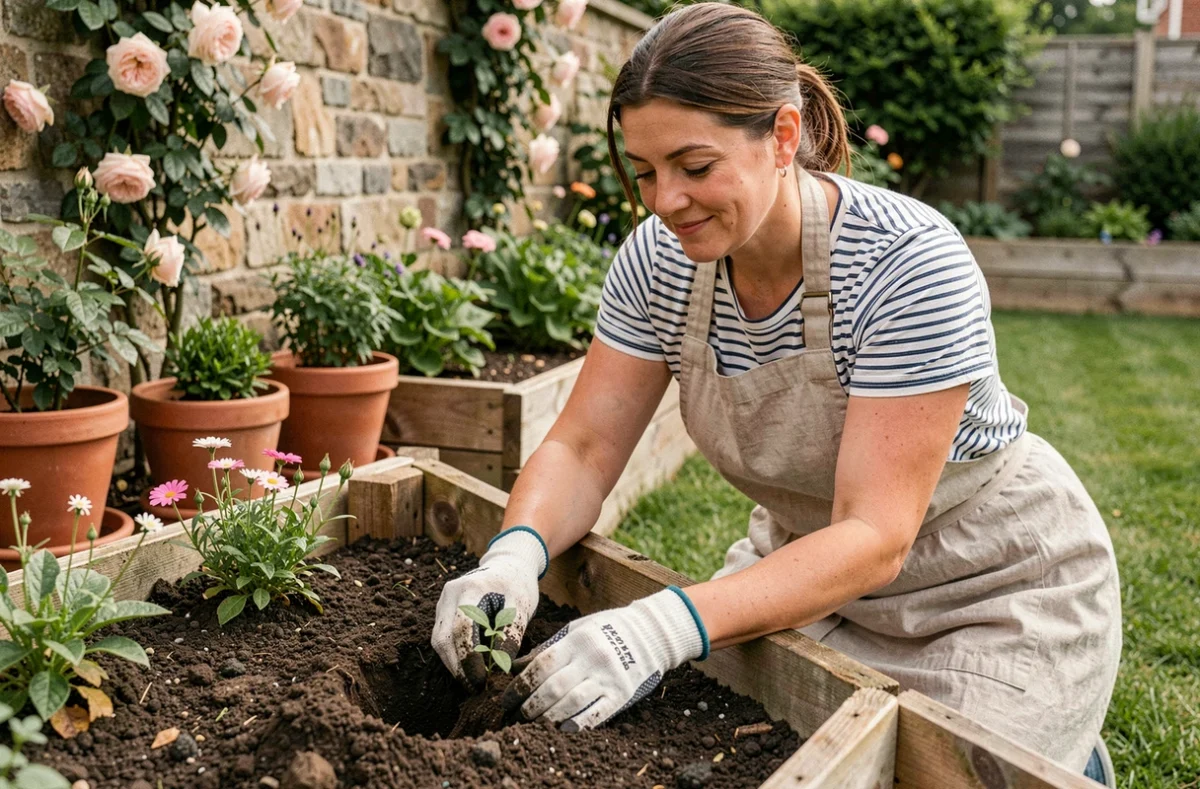
- Grouping annuals in a single dedicated area (a raised planter, for example) concentrates seasonal replanting work instead of spreading it throughout the garden.
A garden that requires less maintenance stays welcoming for longer, including during summer holidays. Choices made at planting time—from moisture zoning and mulching to checking the soil—will determine the workload in the years ahead far more than any tool or accessory.