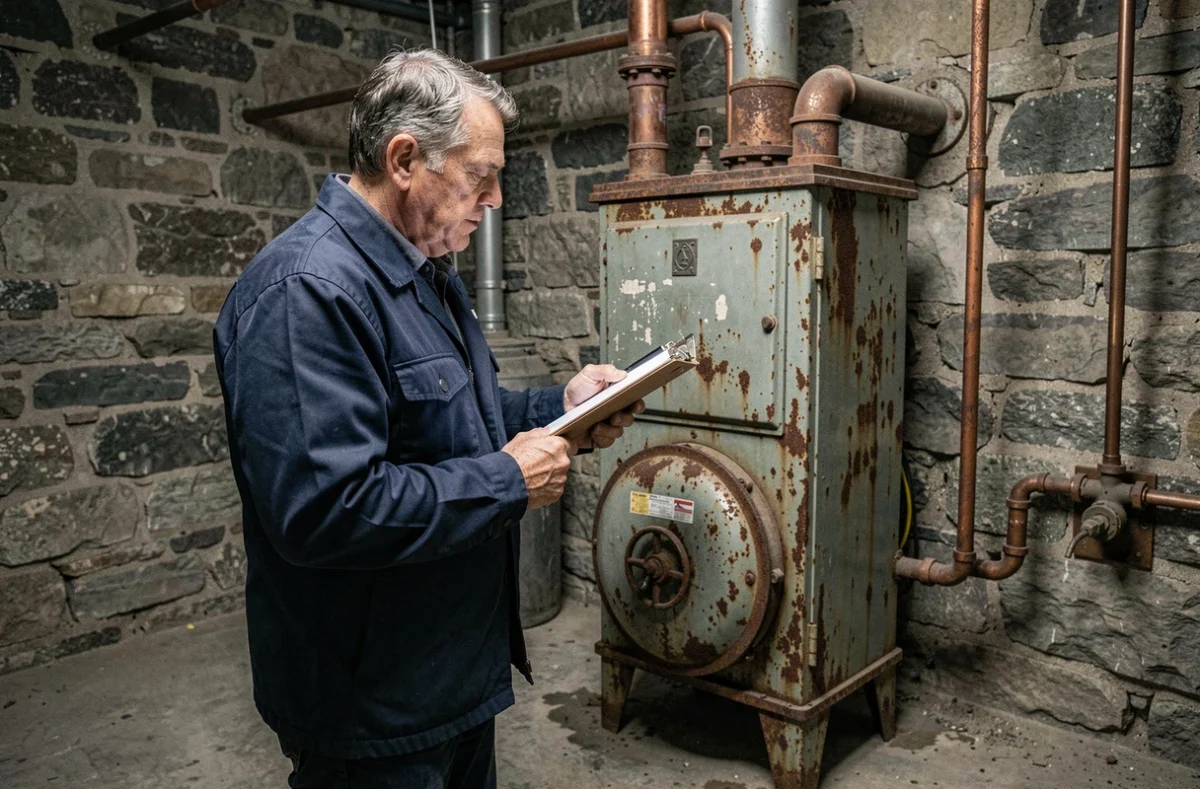
An old boiler of more than fifteen years in a property for sale does not pose a legal problem in itself. It presents a trajectory issue: cost of keeping it in service, fixed energy performance rating (DPE), and almost no access to subsidies in case of replacement with a gas model. Here we detail the technical checks that truly protect the buyer, beyond the simple maintenance certificate.
Risk of energy lock-in for a home with an old gas boiler
An old gas boiler can legally remain in service in an existing home. There is no general prohibition against replacing it with another gas model in 2026. The trap lies elsewhere.
An old appliance often keeps the property in an unfavorable energy performance rating (DPE) (E, F, or G). For a buyer considering renting, the deadlines for prohibiting rentals are already set: class G locked since 2025, class F in 2028, class E in 2034. Keeping the boiler without a renovation plan amounts to buying a property whose rental value may collapse in the medium term.
Another often overlooked angle: new gas boilers no longer benefit from the main public subsidies. A like-for-like replacement therefore relies entirely on the buyer’s budget, which significantly alters the investment calculation. We recommend factoring in this potential additional cost right from the price negotiation, in addition to the checks to be made before purchasing the property.
Mandatory energy audit at sale: what the DPE alone does not show
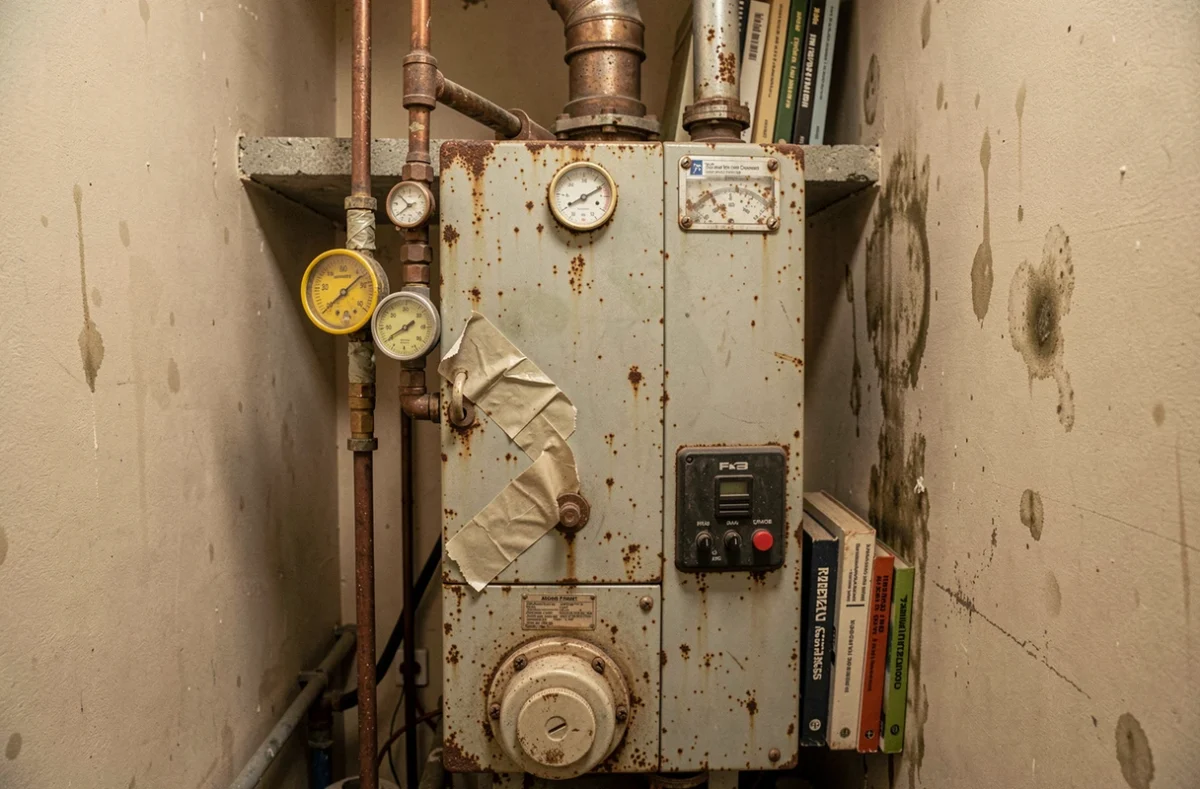
The DPE provides a label. The energy audit, on the other hand, describes costed renovation scenarios and is based on a physical visit to the building. Since April 1, 2023, the audit is mandatory at the sale for individual houses classified E, F, or G (and buildings in single ownership).
We observe that many buyers are content to read the label without opening the audit. This is a mistake. The document contains the scenario for replacing the heating system, with an estimate of the expected class gain and the remaining costs after subsidies.
What to check in the audit
- The scenario for replacing the boiler: heat pump, hybrid system, or other. If the scenario only proposes a gas replacement, check that the class gain is sufficient to move the property out of the rental restriction zone.
- The consistency between insulation and heating: replacing a boiler without addressing the thermal envelope produces only marginal performance gains. The audit must articulate both aspects.
- The date of the audit: an old document may not reflect the available subsidies or the latest regulatory developments.
If the seller does not provide the audit while the property is subject to it, the sale can be contested for lack of information. Demand the complete document before any offer.
Technical check of the old boiler: points to inspect on site
The annual maintenance certificate certifies that a professional has checked the appliance in the last twelve months. It says nothing about the remaining lifespan or the compliance of the installation with current safety standards.
Checks to carry out beyond the certificate
The burner and the heat exchanger concentrate critical wear. A corroded exchanger on a boiler over twenty years old means imminent replacement, and the part is not always available for older models. We recommend asking the heating technician for a diagnosis of the exchanger’s condition, separate from routine maintenance.
The flue must be checked independently. In older installations, the flue may be degraded or absent. A recent cleaning does not guarantee the flue’s tightness or its compatibility with a potential future condensing appliance.
Also check the gas connection: flexible pipe, shut-off valve, low and high ventilation of the technical room. In installations dating back several decades, these elements are often non-compliant with current regulations without blocking the sale, but the cost of bringing them up to standard can reach several hundred euros.

Collective boiler in a co-ownership: a frequent blind spot
When heating is collective, the buyer has no control over the maintenance or replacement of the boiler. The decision lies with the general assembly of co-owners, which significantly extends the timelines for energy transition.
Before signing, we recommend consulting the minutes of the last three general assemblies to identify:
- Any mention of a renovation or replacement project for the collective heating system, and the status of the vote.
- The amount of the works fund (mandatory since the ALUR law) and its capacity to absorb a share of boiler replacement costs.
- The presence of a collective operation or maintenance contract, and the expiration date of this contract.
A property in co-ownership with an old collective boiler exposes the buyer to an unpredictable call for funds. This financial risk must be assessed before the offer, not after.
Negotiate the purchase price by incorporating the real replacement cost
Replacing an old boiler with a heat pump or hybrid system represents a significant investment. In the absence of subsidies for gas, the buyer must finance the transition from their own funds or through a zero-interest eco-loan, the eligibility conditions of which depend on the planned renovation package.
We recommend asking the seller for the latest maintenance certificate, the complete energy audit, and, if possible, a replacement quote from a certified installer. These three documents form the basis of a negotiation based on technical data, not impressions.
The listed price of a property with an end-of-life boiler does not reflect the actual acquisition cost. The difference between the sale price and the total budget (purchase + bringing up to standard + energy transition) can significantly alter the profitability of a rental investment or make a primary residence project less viable than it appears from reading the listing.